Running a machining cell overnight with nobody on the floor sounds reckless — until you watch the numbers. For a year we treated lights-out as a someday project. Then a single high-volume Inconel program forced the issue, and we learned more in eight weeks than in the prior eight years.
The case for unattended runs
Our 5-axis cell was already the bottleneck. Skilled operators spent the back half of every shift babysitting cycles that didn't need them — load, probe, walk away, repeat. The work was there; the hours weren't. Lights-out wasn't about cutting headcount, it was about reclaiming the third of the day we were leaving on the table.
The first question every shop asks is the scary one: what happens when something goes wrong at 2 a.m. and no one is there to hit the e-stop? The honest answer is that you engineer the cell so the machine hits it for you.
"You don't trust the dark. You trust the probe, the model, and the alarm that wakes the machine, not the operator."
Probing & tool-life modeling
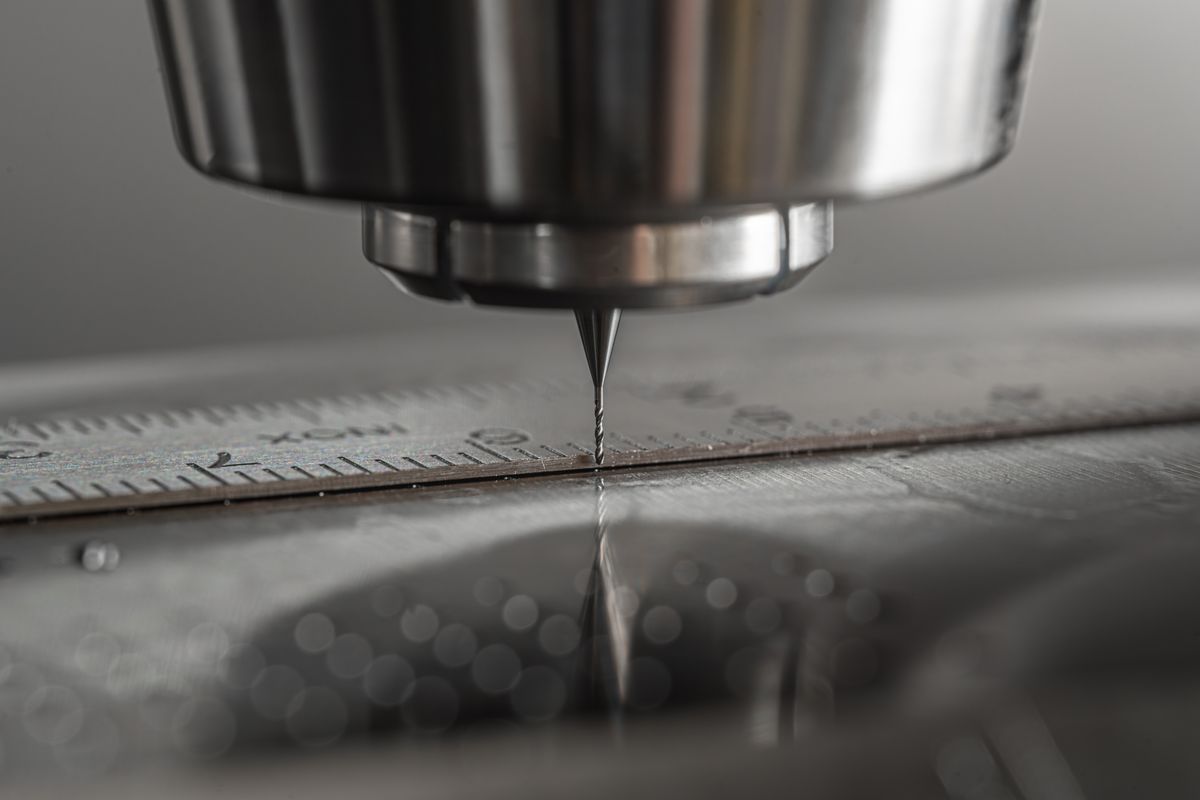
The backbone of an unattended run is in-process probing between operations. Every part gets measured on the machine before the next tool touches it — if a critical feature drifts, the cycle pauses instead of cutting scrap for six more hours.
- Touch-probe checks on every datum before finishing passes
- Tool-life counters that retire an insert before it fails, not after
- Spindle-load monitoring that flags a chip-packing event in milliseconds
Alarms that earn trust
An unattended cell lives or dies on its alarms. Too sensitive and it halts on noise; too loose and it cuts scrap until morning. We tuned thresholds against three months of logged cycles before we ever left the lights off.
Three tiers of response
Minor deviations log and continue. Moderate ones pause the cycle and hold the part in a safe position. Critical faults retract, power down the spindle, and send a text — in that order, every time.
The payback math
The capital wasn't trivial — probing hardware, monitoring software, an enclosure upgrade and three months of engineering time. But the cell now runs a full third shift it never billed before, and the payback landed inside seven months.
What didn't make the cut
Not every part belongs in the dark. Short runs, unproven fixtures and anything without a validated probe routine still run on-shift. Lights-out earns a part its slot — it doesn't get one by default.
If you're weighing the same move, start with one proven, high-volume part and let it earn the trust of the whole cell. That's the only way we'd do it again.